



After backing 13 AI startups, Mary Minno believes momentum, execution, and problem-solving matter more than fundraising.
For many startup founders, fundraising becomes the first milestone. The pitch deck comes before the product. Investor meetings begin before customers are even fully understood. But Mary Minno believes that the mindset is backward.
Her advice to founders is direct: start building first.
Not after raising capital. Not after perfecting the narrative. Not after waiting for investor validation.
Now leading the AI Health Fund, Minno has built her investment philosophy around a belief that execution matters more than early financing. After investing in 13 AI startups, many at the idea stage, she says the strongest founders are rarely the ones waiting around for permission to begin.
They are already solving the problem.
A Personal Experience That Changed Her Direction
Mary Minno’s move into health-tech investing was deeply personal.
After a family member was diagnosed with leukemia, she witnessed firsthand how difficult healthcare systems can become for patients navigating treatment, specialist access, and medical coordination.
The experience exposed a larger reality.
Healthcare may be filled with brilliant researchers, doctors, and technical innovation, but many promising ideas never reach the people who actually need them. The gap between invention and implementation remains enormous.
That realization pushed Minno toward building something focused specifically on AI-driven healthcare innovation.
In late 2025, she launched the AI Health Fund after raising money from friends, family, and prominent investors, including venture capitalist Tim Draper, who invested $1 million into the initiative.
The fund was built with support from Esther Wojcicki, veteran educator and mother of 23andMe founder Anne Wojcicki, and former YouTube CEO Susan Wojcicki. Anne Wojcicki later joined as an operating partner.
But unlike traditional venture firms, the AI Health Fund operates differently from the beginning.
Investing Before the Company Fully Exists
Most venture firms study financial history, traction, and growth metrics before making investment decisions.
Mary Minno often invests before any of that exists.
In many cases, founders receiving support from the AI Health Fund have not even formally incorporated their companies yet. Some are researchers emerging directly from academic labs with technical breakthroughs but little commercial experience.
That changes the entire evaluation process.
Instead of focusing on revenue projections or polished startup storytelling, Minno looks for something more fundamental: insight.
She wants founders who deeply understand the problem they are solving and see the market differently from everyone else.
According to her, the strongest founders teach investors something new about the industry itself.
That level of understanding matters more than hype.
Why Technical Depth Matters in AI
AI has become one of the most crowded and exaggerated spaces in technology.
Every week introduces another startup promising transformation, automation, or disruption. But Mary Minno says separating hype from reality requires looking beneath the marketing.
Her fund strongly favors deeply technical founders.
In many situations, the startups they back are commercializing years of academic research or scientific work that already has evidence behind it. The technology itself is not theoretical.
The real challenge becomes operational.
Can the founder turn research into a usable product? Can they explain the value clearly? Can they build distribution, attract users, and create a sustainable business around the technology?
For Minno, that is where real entrepreneurship begins.
The Biggest Mistake Early Founders Make
One recurring pattern Minno sees among founders is imbalance.
Some founders know how to build products but struggle to communicate their value. Others are excellent storytellers but lack operational depth.
She believes founders eventually need both abilities.
Building and selling are inseparable.
A product without adoption fails. A pitch without substance eventually collapses.
That balance becomes even more important in AI, where technical complexity can easily overwhelm clarity.
The strongest founders simplify without oversimplifying. They understand the technology deeply while communicating it in ways ordinary people can grasp.
AI Fatigue Is Becoming Real
Despite the excitement around artificial intelligence, Minno acknowledges growing public fatigue and skepticism.
People hear constant predictions about AI replacing jobs, disrupting industries, and reshaping society. The pace of change itself has become overwhelming for many workers and consumers.
At the same time, AI tools continue evolving at an extraordinary speed.
Models are improving faster than businesses can fully adapt to them.
Minno believes the conversation around AI has become distorted by fear-based narratives. In reality, she sees AI primarily as a tool that enhances human productivity rather than fully replacing people.
But she also recognizes the uncertainty.
The technology is moving faster than social systems, workplaces, and even founders themselves can comfortably process.
What She Looks for Before Investing
When evaluating founders, Mary Minno focuses less on charisma and more on mindset.
The first quality she values is unique insight.
She wants founders who genuinely understand their market better than most people. That understanding creates better products, stronger positioning, and clearer long-term thinking.
The second quality is receptiveness to feedback.
In the earliest stages of a company, adaptability matters enormously. Founders must learn quickly, iterate rapidly, and adjust when assumptions fail.
And finally, she prioritizes integrity.
Startup ecosystems run heavily on trust, reputation, and relationships. Founders asking others to believe in uncertain futures need credibility behind their words.
Without integrity, none of the other qualities matter for long.
Build First, Raise Later
Perhaps the strongest part of Minno’s philosophy is her rejection of fundraising dependency.
Too many founders, she argues, wait for capital before starting.
But modern technology has lowered the barrier to experimentation dramatically. A prototype can begin as a spreadsheet, a basic app, or even a manually operated workflow before becoming scalable software.
The important thing is momentum.
Founders who start solving real problems immediately learn faster than those endlessly preparing to begin.
That early traction also makes fundraising easier later because investors respond more strongly to evidence than ideas alone.
Minno’s perspective reflects a broader shift happening inside entrepreneurship itself.
The strongest startups increasingly emerge not from polished fundraising narratives, but from founders obsessively focused on solving meaningful problems before anyone else fully sees the opportunity.
And in AI, especially, that urgency matters.
Because while many people are still waiting for permission to build, others are already shaping the future.
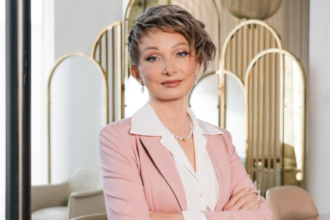
Treehub founder Mary Minno. Photo: Treehub
Source: INC