



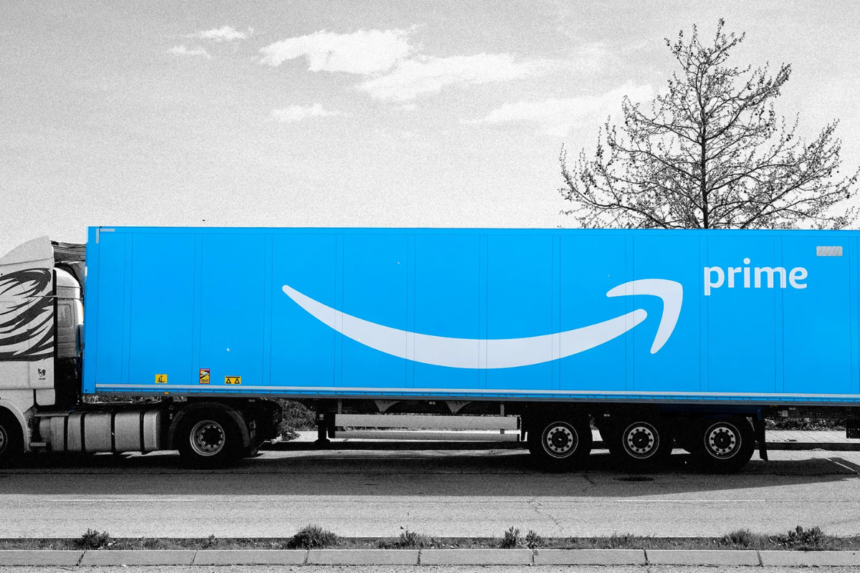
Amazon has launched Amazon Supply Chain Services, a new business unit that transforms its logistics capabilities into a full-scale service for external companies. With this move, Amazon is taking a significant step beyond supporting its own e-commerce operations and opening its infrastructure to the broader market.
The initiative allows businesses of all sizes, not just marketplace sellers, to access Amazon’s freight, distribution, fulfillment, and parcel delivery network. As a result, the company is effectively converting its internal logistics engine into a commercial platform.
This expansion also places Amazon in direct competition with established logistics players such as UPS and FedEx, both of which faced market pressure following the announcement.
From Internal Capability to External Platform
Amazon built its logistics network over decades to support its core e-commerce business, where speed, reliability, and scale became key competitive advantages.
Now, through Amazon Supply Chain Services, the company is extending that same infrastructure to industries beyond retail, including healthcare, manufacturing, and automotive.
This shift marks a clear transition from internal optimization to external monetization.
According to Peter Larsen, Vice President of the division, the model mirrors the evolution of Amazon Web Services, where Amazon turned internal systems into a globally accessible service platform.
Early Adoption Signals Market Demand
Early adoption suggests strong demand for integrated logistics solutions.
Major companies are already putting the platform to use. Procter & Gamble is using Amazon’s freight network to move raw materials, while 3M is relying on it for distribution logistics.
These early partnerships indicate that Amazon is not simply testing a concept; it is entering the logistics services market with immediate enterprise-scale traction.
Retail brands, including Lands’ End and American Eagle Outfitters, are utilizing fulfillment and parcel delivery services, demonstrating the platform’s applicability across different operational needs.
This early traction reinforces the strategic intent behind Amazon Supply Chain Services, where flexibility and modular service offerings allow businesses to integrate only the components they require.
Financial Strength Enables Expansion
The expansion comes alongside strong financial performance, with Amazon reporting first-quarter revenue of $181.5 billion, up 17 percent year-on-year.
Growth in AWS, which generated $37.6 billion in revenue with a significant contribution from AI-related services, provides the financial backbone supporting Amazon Supply Chain Services expansion.
This structure allows Amazon to invest in logistics infrastructure while maintaining overall profitability, creating a dual-engine model where cloud services fund long-term operational capabilities.
Competitive Pressure on Traditional Logistics
Amazon Supply Chain Services introduces a different competitive framework within the logistics sector, where infrastructure is deeply integrated with data, forecasting, and fulfillment systems.
Traditional carriers like UPS and FedEx operate as standalone logistics providers, while Amazon integrates logistics within a broader ecosystem that includes retail, cloud computing, and data analytics.
This difference enables Amazon to optimize costs, improve delivery timelines, and offer end-to-end visibility, reshaping expectations for how supply chains are managed.
A Structural Shift in Global Logistics
The launch of Amazon Supply Chain Services reflects a broader transformation in how logistics is defined, moving from a standalone function to an integrated platform capability.
By opening its infrastructure to external businesses, Amazon is extending its influence beyond commerce into the operational backbone of multiple industries.
The direction follows a familiar pattern. Build scale internally, then convert that scale into a service that others depend on.
Source: INC
Photo: Getty Images