


A Conflict Now Reflected in Earnings
More than six weeks into the Iran war, its effects are no longer theoretical. They are appearing directly in earnings calls, shaping how companies assess demand, risk, and investment priorities.
Rising oil prices, disrupted supply chains, and weaker consumer activity in the Middle East have started influencing financial performance across sectors.
Investment Banking Stays Active
David Solomon indicated that dealmaking activity remains strong despite geopolitical uncertainty.
At Goldman Sachs, mergers and acquisitions continue at a steady pace, supported by long-term strategic bets, particularly around artificial intelligence.
This reflects a clear pattern. Large financial institutions continue to operate on forward-looking opportunities, even as they monitor geopolitical risk in the background.
Advertising Holds Spend, Delays Decisions
Arthur Sadoun highlighted a more cautious response from clients at Publicis Groupe.
Companies have delayed large transformation investments due to uncertainty, but they have not significantly reduced marketing budgets.
The reasoning remains direct. Cutting marketing weakens competitive position and leads to long-term loss of market share.
However, the region has seen an impact. Publicis reported a 5.1 percent decline in organic revenue across the Middle East and Africa, with the UAE and Israel most affected.
Luxury Sector Feels Immediate Pressure
Luxury brands, heavily dependent on Middle Eastern retail demand, are seeing sharper effects.
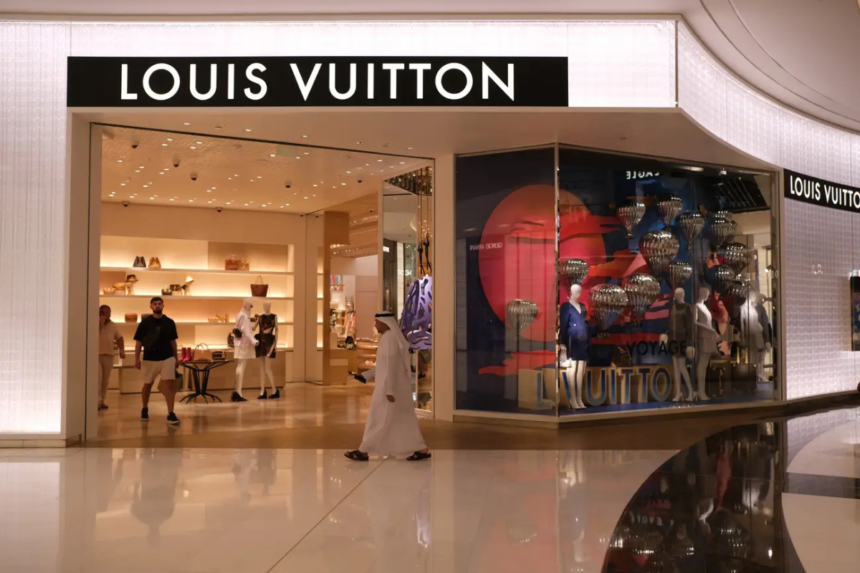
At LVMH, CFO Cécile Cabanis noted a clear drop in demand, driven by reduced mall traffic and lower consumer activity.
Some segments remain relatively stable. Sephora’s performance has held better due to a stronger presence in Saudi Arabia, where conditions have been comparatively steady.
At Kering, CFO Armelle Poulou reported an 11 percent decline in regional retail revenue, with additional impact extending into Western Europe due to reduced tourist flows.
Hermès also recorded a 6 percent drop in Middle East sales, alongside weaker spending from regional customers in France.
Demand Has Shifted, Not Disappeared
Executives across luxury groups point to a consistent insight. Wealth has not vanished, but spending behavior has shifted.
If the conflict continues, consumption may relocate geographically rather than decline permanently. Companies are preparing to follow demand wherever it reappears.
Energy and Supply Chain Pressure
Oil prices near $100 per barrel continue to influence operational costs and consumer sentiment.
Higher energy costs affect logistics, manufacturing, and discretionary spending, creating a layered impact across industries.
Supply chain adjustments are already underway, as businesses adapt to disruptions in trade routes and regional instability.
What This Reveals About Strategy
The responses across sectors show a divergence in impact but a common shift in thinking.
Companies are not reacting with immediate contraction. They are adjusting timelines, reallocating focus, and preparing for extended uncertainty.
Closing Perspective
The conflict has not halted business activity, but it has altered its rhythm. Decisions are being made with greater caution, longer horizons, and a sharper awareness of how quickly geopolitical events can reshape demand, cost structures, and global movement of capital.
Source: BI
LVMH, which owns Louis Vuitton, has said that lower footfall in Middle East malls has affected business. Kaveh Kazemi/Getty Images