



Warning From Global Markets
Ken Griffin has warned that a prolonged shutdown of the Strait of Hormuz could push the global economy into a recession.
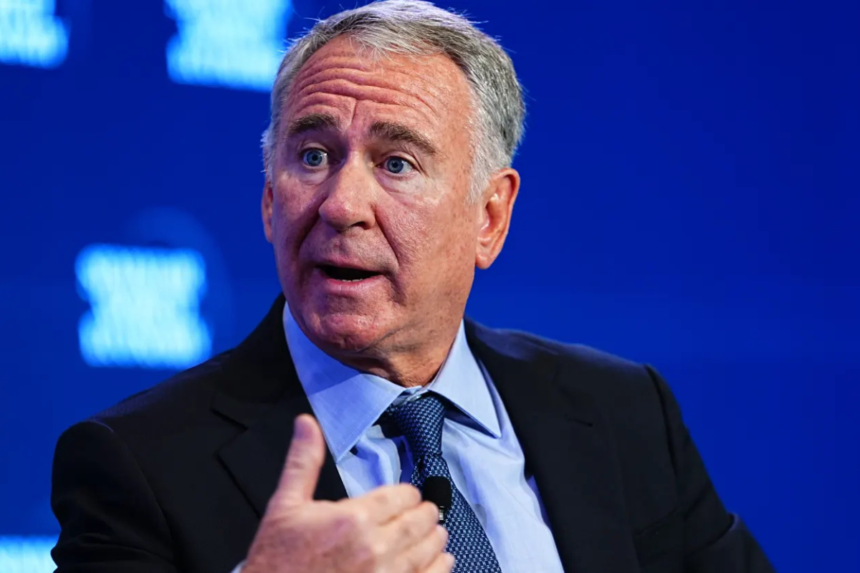
Speaking at the Semafor World Economy conference in Washington, D.C., Griffin stated that if the strait remains closed for six to twelve months, the economic fallout would be unavoidable.
Oil Supply Shock and Economic Impact
The Strait of Hormuz is one of the world’s most critical energy corridors, handling a significant share of global oil shipments. Any disruption directly affects supply, pricing, and economic stability.
Oil prices have already climbed to around $100 per barrel, compared to levels below $70 before the conflict. This increase places pressure on economies that rely heavily on energy imports, particularly across Asia.
Higher energy costs translate into rising inflation, reduced consumer spending, and tighter financial conditions across global markets.
Markets Holding, But Risks Remain
Equity markets have shown resilience, with stocks recovering to levels seen before the escalation earlier this year.
However, this stability rests on a fragile assumption. Investors are pricing in a limited conflict, not a prolonged disruption to global trade routes.
A sustained closure of the strait would force a reassessment of risk across markets, particularly in sectors dependent on energy and global supply chains.
Shift Toward Alternative Energy
Griffin indicated that such a disruption would accelerate the transition toward alternative energy sources.
Wind, solar, and nuclear energy would gain momentum as countries look to reduce dependence on vulnerable oil routes.
This shift would not be gradual. It would be driven by necessity, as governments and industries respond to sustained supply constraints and price volatility.
Strategic and Geopolitical Context
Griffin also noted that earlier military intervention may have prevented a more severe outcome, suggesting that delays could have allowed further escalation in Iran’s capabilities.
The situation reflects a broader reality. Energy security remains tightly linked to geopolitical stability, and disruptions in key chokepoints carry consequences far beyond regional conflict.
Closing Perspective
The risk is not limited to oil markets. A prolonged disruption in the Strait of Hormuz would ripple across trade, inflation, and global growth, exposing how dependent the modern economy remains on a few critical routes.
officer of Citadel Advisors LLC, at the Semafor World Economy Summit
during the International Monetary Fund (IMF) and World Bank Spring
meetings in Washington, DC, US, on Tuesday, April 14, 2026. Aaron Schwartz | Bloomberg | Getty Images
Source: CNBC