


From Telecom to Real Estate
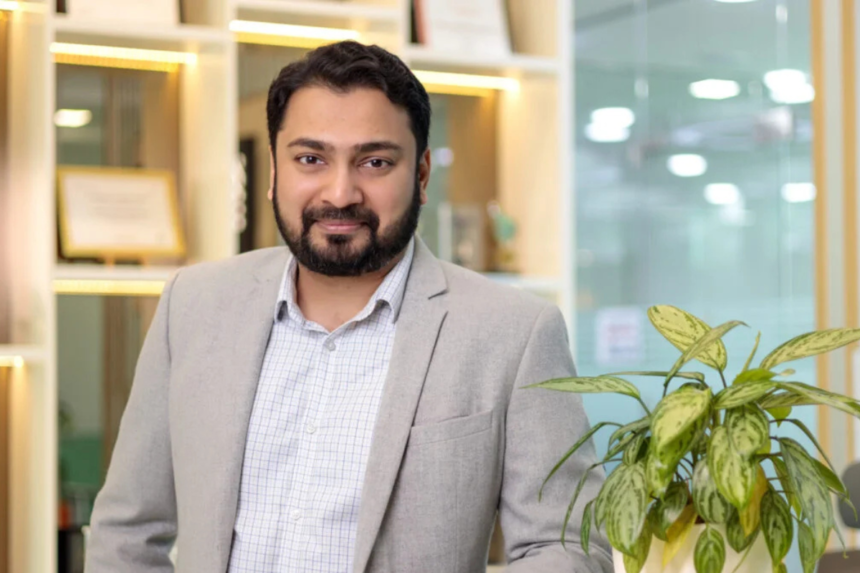
Mohsin Ayub began his career in the telecom sector with a background in Computer Systems Engineering and an MBA in Marketing, where he spent over five years managing internet and network operations while building strong technical and analytical capabilities.
His transition into real estate happened shortly after arriving in Dubai, where he made a decisive shift into a new industry, turning what began as an unexpected opportunity into a long-term, technology-driven career path.
Identifying Gaps in the Industry
Rather than approaching real estate as a purely sales-driven field, Mohsin focused on the structural inefficiencies within the system, particularly in marketing and operations, where manual processes and fragmented workflows limited performance.
He recognized that these gaps created an opportunity to introduce more efficient systems, using performance marketing strategies and automation to streamline operations and improve how businesses managed leads and client engagement.
Blending Technology with Strategy
Mohsin Ayub combined technical expertise with marketing insight, which allowed him to move decision-making away from instinct and toward data.
Instead of relying on assumptions or routine activity, he built systems around measurable results. Because of that, every process served a clear purpose and supported a specific business outcome.
As a result, he changed the way many real estate companies approached growth. His approach made their systems more scalable, more responsive, and better suited to changing market conditions.
Transforming Workflows Through Automation
At the same time, Mohsin improved daily operations by creating automation systems in partnership with property portals and CRM platforms.
These systems reduced manual data entry, removed duplicate work, and ensured that teams captured and managed leads more efficiently.
Because of that, companies improved their accuracy, responded to clients more quickly, and converted more leads into sales.
Most importantly, automation gave teams more time to focus on strategy and growth instead of spending their days on repetitive tasks.
Enhancing Property Experience
Mohsin Ayub also introduced virtual property tours using Oculus technology, allowing clients to explore homes remotely while still experiencing the space in a realistic and immersive way.
As a result, he expanded his reach beyond in-person buyers, reduced the need for physical visits, and made the property search process more flexible and convenient for clients.
Building for the Future
At the same time, Mohsin has shifted his focus toward new technologies such as AI and blockchain.
He is developing AI-powered systems that can improve customer targeting, personalize interactions, and help identify higher-quality leads. Meanwhile, he is also exploring blockchain technology to make real estate transactions more transparent and secure.
Together, these efforts reflect a broader move toward smarter systems that can improve both efficiency and trust.
Learning From Dubai’s Real Estate Market
Working in the fast-moving real estate market of Dubai has also shaped the way Mohsin approaches business.
Over time, he learned that long-term success depends on staying consistent, adapting quickly, and continuing to improve as market conditions change.
Because of that, he focuses on steady execution rather than short-term results. Instead of relying on one successful moment, he continues to refine his strategy and build on it over time.
A Focus on Creating Value
Ultimately, Mohsin centers his work on creating clear and measurable value.
He applies that approach across every part of the business, from improving internal systems to delivering better experiences for clients and building a structure that can grow over time.
As a result, he uses technology not simply to make operations faster, but to improve the way the entire industry works.
Conclusion
Mohsin Ayub’s journey reflects a shift in how real estate is being shaped, where technology is no longer a supporting function but a core operational layer that drives efficiency, innovation, and growth.