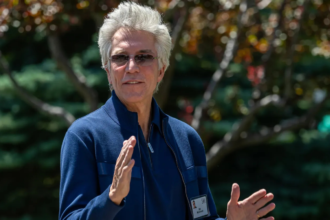
Warren Buffett has stepped down as CEO of Berkshire Hathaway, but the shift is structural, not absolute.
At 95, he continues as chairman, works from the office daily, and remains involved in investment decisions alongside his successor Greg Abel.
Authority has been transferred. Influence has not.
A Rare Leadership Model
Warren Buffett transformed Berkshire Hathaway from a struggling textile company into a global conglomerate and delivered returns of more than five million percent.
Now, however, the leadership transition has created an unusual structure. Although Buffett no longer leads the company in the same way, he remains closely involved. At the same time, he advises without taking control.
Even with his continued presence, Buffett has placed clear limits on his role. He has said that he will not make investment decisions that go against the judgment of Greg Abel.
Continuity Through Close Contact
Meanwhile, Buffett and Abel continue to work closely together. They speak regularly, share ideas, and discuss important decisions.
Because of that, the company keeps the benefit of Buffett’s experience while giving Abel the freedom to lead day-to-day operations.
Rather than separating completely, Berkshire Hathaway has chosen a slower and more deliberate transition. As a result, the company can pass leadership from one generation to the next without losing stability.
The Strategic Advantage
Keeping a former leader inside the organization offers a clear advantage.
The company can still access valuable institutional knowledge. Leaders can use past experiences, earlier decisions, and previous mistakes to guide current choices. As a result, the transition becomes more stable and less uncertain, especially during a change in leadership.
The Risk Within the Structure
At the same time, however, this arrangement can create tension.
A new leader must establish authority while continuing to work alongside the person who shaped the organization for decades.
Because of that, perception becomes important. Employees may hesitate before fully embracing the new leader. Some may compare the two leaders, while others may question the company’s direction.
As a result, decision-making can slow down under unspoken pressure. The real challenge is not day-to-day operations. Instead, it comes from the psychological and cultural impact of having both the former and current leaders inside the same system.
Managing the Dynamic
The effectiveness of this arrangement depends on clarity. Roles must be defined. Boundaries must be respected. Influence must not become interference.
The relationship shifts from hierarchy to alignment. The former leader becomes an advisor, not a shadow authority.
Present Structure
Berkshire Hathaway now operates with two levels of leadership.
Greg Abel oversees the company’s day-to-day decisions, while Warren Buffett continues to provide guidance and perspective. The company’s future will depend on how well those two roles work together.
Rather than moving on from the past, Berkshire Hathaway is bringing it into its next chapter carefully and deliberately.
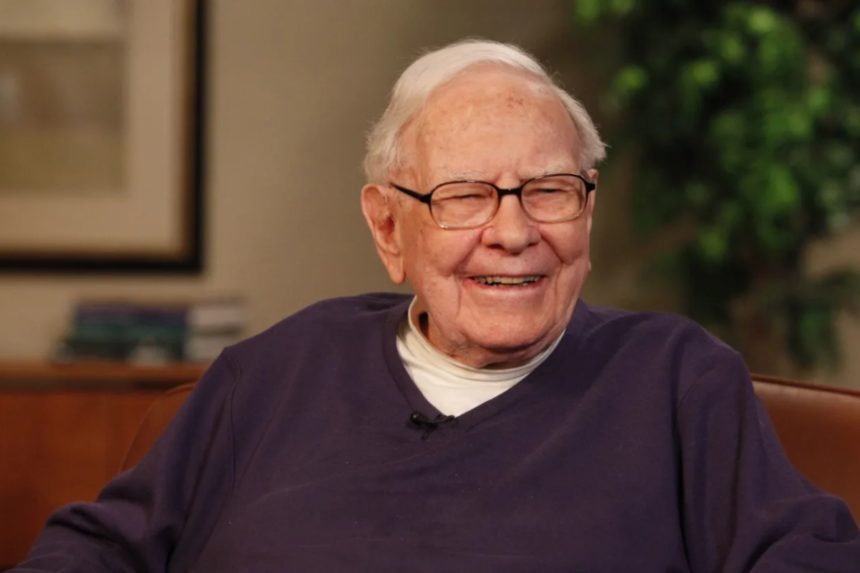
Warren Buffett speaking with Becky Quick on CNBC’s Squawk Box from Omaha, NE on March 31st, 2026.
Gerard Miller | CNBC