


The fast-food giant admits past mistakes through humor but must now prove improvements.
A High-Profile Oscars Marketing Push
Burger King made a major statement during this year’s Academy Awards by launching a series of commercials throughout the broadcast.
The fast-food chain secured multiple advertising slots and even received on-air mentions of its sponsorship during key moments of the ceremony. Among the ads shown, one stood out for its unusual tone.
Instead of a traditional promotional campaign, Burger King delivered a 90-second self-critical message acknowledging the brand’s past mistakes.
Admitting Past Problems
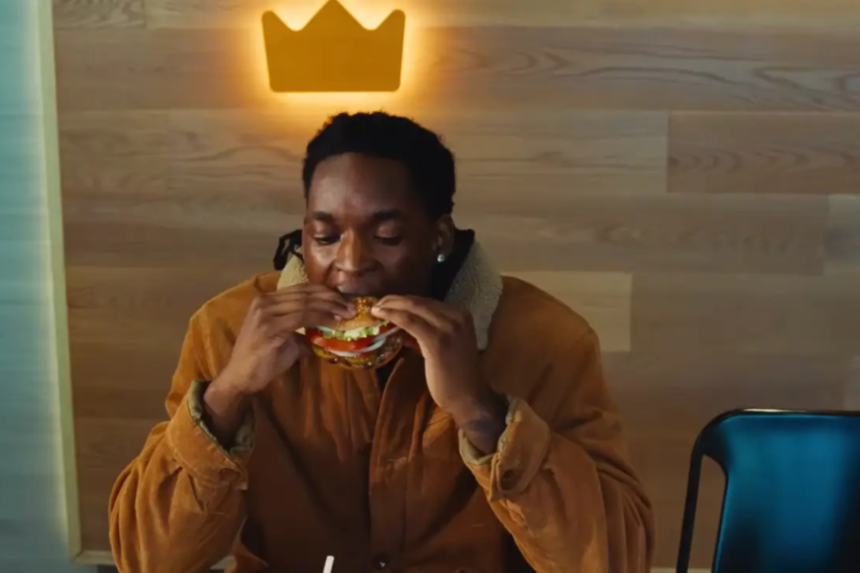
The centerpiece commercial, titled “There’s a New King, and It’s You,” took a candid approach.
In the spot, the company openly referenced issues customers have complained about for years. These included slow service, burgers damaged by poor packaging, and a perception that the brand had fallen behind competitors.
The ad suggested the company had taken steps to address these problems.
Burger King said it had moved away from its long-running King mascot, reinvested in restaurant operations, and updated the recipe for its signature Whopper burger.
Listening to Customer Feedback
The Oscars campaign also highlighted Burger King’s recent efforts to gather customer feedback more directly.
Earlier this year, the company publicly shared a phone number allowing customers to call or text Tom Curtis, the president of Burger King in the United States and Canada.
Curtis said the initiative generated tens of thousands of messages and voicemails from customers.
According to him, feedback about the Whopper consistently appeared among the most discussed topics.
One of the Oscar ads referenced these conversations directly, emphasizing that the company had used customer input to refine the burger’s recipe.
Leadership as the Face of the Brand
Curtis has become an increasingly visible figure in Burger King’s marketing strategy.
He narrated the main Oscars commercial and has appeared frequently in social media content representing the brand.
Earlier in March, Curtis posted a video biting into a burger in response to a widely circulated clip featuring McDonald’s CEO Chris Kempczinski tasting a new product.
The McDonald’s video drew criticism online for what viewers described as an overly scripted and awkward presentation.
Burger King’s response positioned itself as more informal and self-aware.
Part of the “Reclaim the Flame” Strategy
The Oscars campaign is part of Burger King’s broader turnaround plan known as “Reclaim the Flame.”
Launched in 2022, the initiative focuses on revitalizing the brand through restaurant upgrades, operational improvements, and stronger marketing investment.
The plan included a $400 million investment in restaurant refurbishment, equipment modernization, and advertising campaigns.
Burger King’s parent company, Restaurant Brands International, announced earlier this year that it plans to invest up to $700 million in the program by 2028.
Early signs suggest modest improvement.
In the December 2025 quarter, Burger King reported 2.6 percent growth in same-store sales in the United States. For the full year, sales rose 1.6 percent.
Self-Deprecating Advertising Gains Attention
Marketing analysts say Burger King’s Oscars ads may resonate with audiences because of their unusually candid tone.
Camilla Yates, managing partner at the creative agency Elvis, said the campaign’s self-aware humor could stand out in an industry often dominated by celebrity-driven advertising.
The ads combined operational messaging with direct communication from leadership.
This approach may appear more authentic to viewers than traditional marketing formats.
However, Yates warned that relying too heavily on functional messaging could become less engaging over time.
If the campaign loses its entertainment value, audiences may quickly lose interest.
Why the Oscars Matter to Brands
Large cultural events like the Oscars and the Super Bowl remain rare opportunities for brands to reach massive audiences simultaneously.
According to Nielsen, last year’s Academy Awards attracted 19.7 million viewers in the United States.
Advertising demand remains strong for the event.
Disney, which broadcasts the Oscars on ABC and Hulu, said it sold out all advertising slots for the telecast.
Major brands appearing alongside Burger King included Rolex, Mazda, Pfizer, Verizon, and McDonald’s.
Nostalgia and Honesty in Brand Messaging
Vicky Bullen, chief executive of the branding agency Coley Porter Bell, said Burger King’s campaign blended two powerful marketing themes.
First, it acknowledged past mistakes openly.
Second, it drew on nostalgia by referencing the brand’s long history and cultural identity.
During uncertain times, she said, consumers often respond positively to familiar brands that evoke stability.
A Brand Still Facing Challenges
Despite the bold campaign, Burger King still faces significant brand perception challenges.
Data from WPP’s BAV brand equity database, which measures brand health, suggests many fast-food brands in the United States are shifting from leadership positions toward what analysts describe as a “fatigued” stage.
According to the research, Burger King’s decline in brand strength has been faster than that of several competitors.
To regain market momentum, experts say the company must clearly define what differentiates it from rivals.
The Next Test for Burger King
The Oscars campaign may have succeeded in capturing attention.
However, the long-term success of the strategy depends on whether operational improvements match the promises made in advertising.
For Burger King, acknowledging past mistakes may be a powerful first step.
The next challenge is proving to customers that the changes are real.
Source: BI
Burger King’s new ad campaign says the customer is king. @BurgerKing/YouTube