



Oil Prices Climb Amid Rising Geopolitical Tensions
Global oil prices climbed sharply on Monday as escalating tensions in the Middle East raised concerns about supply disruptions.
The international benchmark Brent crude rose 1.5 percent to $104.72 per barrel, while U.S. West Texas Intermediate (WTI) traded at $98.91 per barrel, after briefly surpassing the $100 mark earlier in the session.
Both oil benchmarks have surged more than 50 percent in the past month, reaching their highest levels since 2022.
The rally reflects growing fears that the ongoing conflict involving Iran could disrupt key energy infrastructure and shipping routes in the region.
Strait of Hormuz Under Pressure
A central focus of market concerns is the Strait of Hormuz, one of the world’s most critical energy chokepoints.
The narrow waterway connects Gulf oil producers to global markets and typically carries around 20 percent of the world’s oil supply.
Shipping traffic through the corridor has been severely disrupted as tensions escalated, creating uncertainty for energy traders and governments worldwide.
Trump Pushes Allies to Protect Oil Route
U.S. President Donald Trump said over the weekend that his administration is urging allied nations to help protect oil tankers traveling through the Strait of Hormuz.
He told reporters that Washington is already discussing a coordinated security operation with several partner countries.
According to U.S. officials quoted by the Wall Street Journal, multiple nations may soon join a naval effort to escort commercial vessels through the strategic waterway.
Authorities are still deciding whether the escort operation will begin during the conflict or after hostilities subside.
Warning of Potential Strikes on Oil Infrastructure
Trump also warned that the United States could expand its military operations against Iran’s energy facilities.
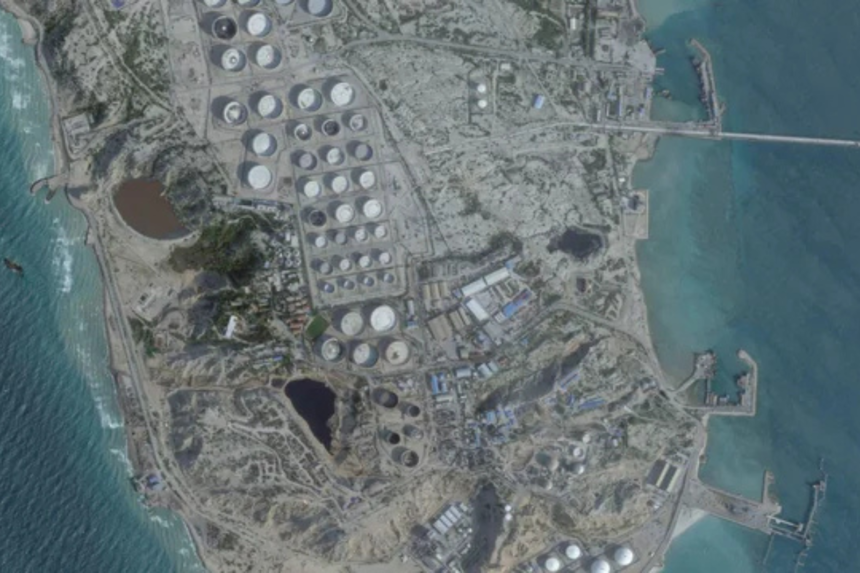
In an interview with NBC News, the president said U.S. forces had already struck Iranian military targets on Kharg Island, one of the country’s most important oil export hubs.
Trump said the strikes “demolished” much of the island’s military infrastructure.
He added that the United States might consider targeting crude oil facilities there if Iran continues attacking tankers in the Strait of Hormuz.
Kharg Island’s Strategic Role
Kharg Island plays a central role in Iran’s oil exports.
According to JPMorgan, roughly 90 percent of Iran’s crude exports pass through the island’s terminals.
Iran produced about 3.2 million barrels of oil per day in February, based on data from the Organization of the Petroleum Exporting Countries (OPEC).
A direct strike on the island’s export infrastructure could halt most of Iran’s shipments to international markets.
Risk of Retaliation and Supply Shock
Energy analysts warn that attacks on Iran’s oil infrastructure could trigger severe retaliation.
Natasha Kaneva, head of global commodity strategy at JPMorgan, said a strike on Kharg Island’s export facilities could immediately halt around 1.5 million barrels per day of crude exports.
Such a disruption could provoke Iranian retaliation targeting shipping lanes or regional energy infrastructure.
The escalation could deepen what analysts already describe as one of the largest oil supply disruptions in modern history.
Emergency Oil Releases Underway
In response to the crisis, more than 30 countries have agreed to release approximately 400 million barrels of emergency oil reserves.
The coordinated action represents the largest strategic stockpile release ever organized.
The United States plans to release 172 million barrels from its Strategic Petroleum Reserve as part of the effort.
The International Energy Agency (IEA) is coordinating the global response.
According to the Paris-based agency, Asian nations will begin releasing oil supplies immediately, while countries in the Americas and Europe are expected to follow later in March.
Prices May Remain Volatile
Despite the emergency supply release, energy officials warn that oil markets could remain volatile.
U.S. Energy Secretary Chris Wright said it is impossible to guarantee that oil prices will decline soon.
“There are no guarantees in wars,” Wright said in an interview with ABC News.
He added that the situation could be significantly worse without military actions aimed at protecting global energy supply routes.
Global Markets Watching Closely
With tensions continuing in the Middle East, investors are closely monitoring developments in the region.
Any disruption to energy infrastructure or prolonged closure of the Strait of Hormuz could have far-reaching consequences for global energy markets.
For now, oil prices remain highly sensitive to geopolitical developments as governments and traders assess the risks to one of the world’s most important oil supply corridors.
Source: CNBC