


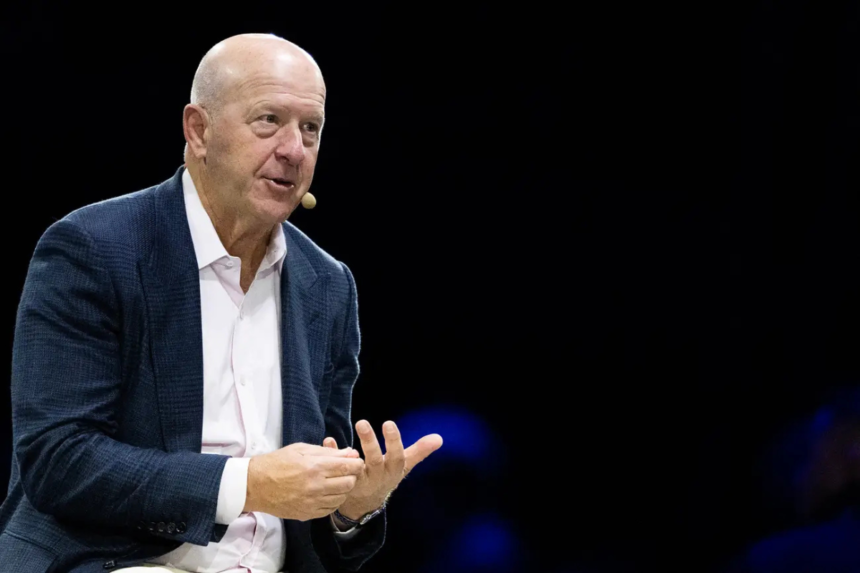
David Solomon believes 2026 could mark a powerful resurgence in mergers and acquisitions.
Speaking at a UBS financial services conference in Miami, the Goldman Sachs CEO outlined why he expects dealmaking momentum to accelerate after several challenging years for capital markets.
After navigating private equity stagnation and market volatility, Solomon said the firm enters 2026 with renewed confidence. He described the coming year as potentially “top decile” for strategic M&A activity.
Deregulation Shifts the Mood From “No” to “Maybe”
Solomon identified a significant regulatory shift in the United States as the first major catalyst.
He noted that during the past five years, dealmakers faced a restrictive environment where regulatory resistance frequently blocked transactions. That dynamic, he argued, has softened.
Instead of automatic rejections, corporations now face a more receptive regulatory tone. Solomon described the change as moving from a default “no” to a conditional “maybe.”
This shift, he suggested, could also reignite IPO activity, which has remained muted during recent market cycles.
Private Equity Pressure Reaches a Breaking Point
The second driver comes from private equity.
Large sponsors held portfolio assets longer than expected due to valuation concerns and elevated interest rates. Limited partners now demand capital returns, increasing pressure on fund managers to execute exits and pursue new transactions.
Solomon indicated that many firms can no longer delay deployment decisions. Fundraising cycles and LP expectations have tightened. Sponsors must move forward.
For investment banks like Goldman, that unlock could translate into renewed advisory mandates and underwriting activity.
AI Investment Fuels Capital Demand
Artificial intelligence forms the third pillar of Solomon’s outlook.
Technology giants continue to raise significant capital to fund AI infrastructure, including debt issuance for data centers and compute expansion. Solomon expects this wave of investment to cascade into broader capital-raising cycles.
He emphasized that sustained AI investment requires financing, which strengthens both equity and debt markets. That environment typically encourages strategic acquisitions and corporate consolidation.
Risks Remain, But Outlook Is Constructive
Solomon acknowledged persistent uncertainty around trade policy, inflation, and geopolitics. Policy volatility could still influence market stability.
Despite those risks, he characterized 2026 as likely constructive for capital markets, particularly in large-cap strategic M&A.
The David Solomon M&A outlook 2026 reflects a broader shift in sentiment. Regulatory easing, private equity liquidity pressure, and AI-driven capital demand together form the foundation for renewed deal activity.
If those forces align, Goldman Sachs anticipates a materially stronger year for global mergers and acquisitions.
Goldman Sachs CEO David Solomon. MARCO BERTORELLO/AFP via Getty Images
Source: BI
Read more news, and follow us on Instagram