


India’s ambition to become a global electronics and telecom manufacturing hub faces a critical challenge. According to Ajai Chowdhry, the country must urgently fix gaps in its air logistics system to sustain momentum.
Speaking to Business Today, the HCL co-founder and founder of the Electronics Products Innovation Consortium said inward and outward logistics continue to lag, despite policy initiatives such as the government’s Gati Shakti national master plan.
“India still lacks seamless logistics and true ease of doing business,” he said. “Electronics manufacturing depends on components sourced from multiple countries. Those parts must arrive quickly and without disruption.”
Why electronics depend on speed
Unlike traditional manufacturing, electronics operates on tight timelines.
For that reason, logistics plays a central role rather than a supporting one. Chowdhry pointed to Taiwan and Vietnam as benchmarks for efficiency.
“In those countries, components arrive in the morning, get assembled the same day, and ship out the next morning,” he said. “Electronics demands that pace.”
In India, however, delays across the logistics chain slow production, cut efficiency and raise costs.
Air cargo remains the biggest constraint
Chowdhry stressed that electronics manufacturing relies heavily on air transport.
“Nearly 80 to 90 percent of electronics components move by air, not by sea,” he said. “That makes air logistics essential.”
At present, India lacks enough large cargo aircraft and modern cargo infrastructure. According to Chowdhry, this issue has surfaced repeatedly in discussions at NITI Aayog.
As electric vehicle manufacturing expands, pressure on air logistics will only increase. “About 70 percent of an EV’s value comes from electronics,” he added.
Warehousing needs to follow manufacturing
Beyond transport, Chowdhry highlighted another structural gap. Most global electronics distributors operate warehouses in Singapore or Hong Kong rather than India.
“That model doesn’t work if manufacturing happens here,” he said. “Warehouses must sit close to factories.”
Moving component storage into India would reduce delivery times and lower costs. Until broader reforms take shape, Chowdhry suggested building large component warehouses in manufacturing hubs such as Noida, Chennai, Bengaluru, and Hyderabad.
A decisive factor for global supply chains
Chowdhry, who works closely with industry bodies and policymakers, said logistics remains one of the biggest obstacles to integrating India into global electronics value chains.
“Unless we fix inward and outward logistics, the manufacturing vision remains incomplete,” he said.
As global companies rethink supply chains, India’s ability to improve electronics air logistics may decide whether it emerges as a preferred manufacturing destination or falls behind competinFollow us on Instagram and stay updated with our current news
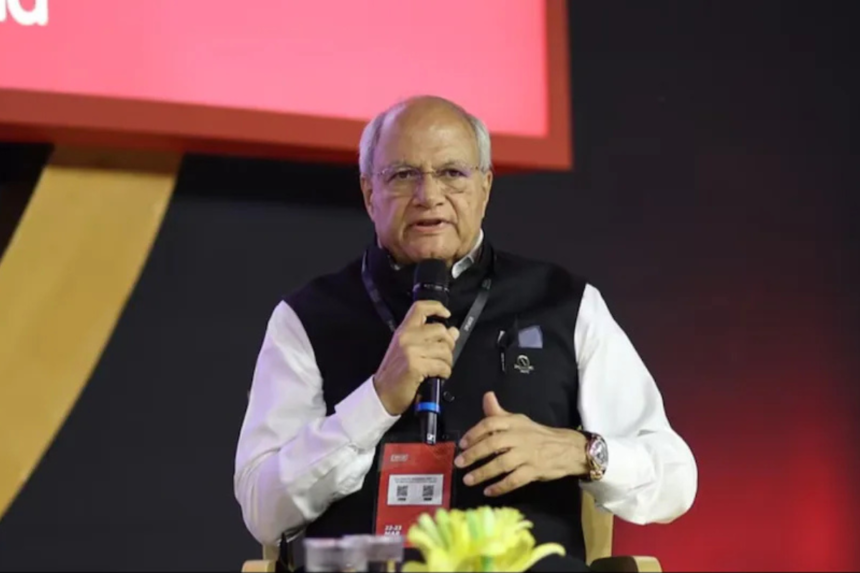
Ajai Chowdhry, Founder of Electronics Products Innovation Consortium and Co-Founder, HCL