

Sharp Market Reaction Across Luxury Giants
As geopolitical tensions intensify due to the Iran war, the global luxury sector is taking a significant hit, with volatility spreading across financial markets.
In particular, shares of LVMH, Hermès, and Ferrari have declined sharply, falling between 15 percent and 20 percent since the conflict escalated.
By comparison, broader markets such as the S&P 500 have recorded relatively smaller declines, highlighting the sector-specific impact.
$100 Billion in Market Value Eroded
As a result, the sell-off has wiped out nearly $100 billion in market capitalization across major luxury companies.
Notably, LVMH and Hermès have each lost over $40 billion in value, reflecting a rapid shift in investor sentiment toward caution.
This decline comes at a critical time, as the industry had been expecting a recovery after a prolonged period of weak growth.
Middle East Emerges as a Critical Risk Factor
The current disruption underscores the growing importance of the Middle East to the global luxury ecosystem.
While the region accounts for around 6 percent of global luxury sales, it has been the fastest-growing market, with annual growth between 6 percent and 8 percent.
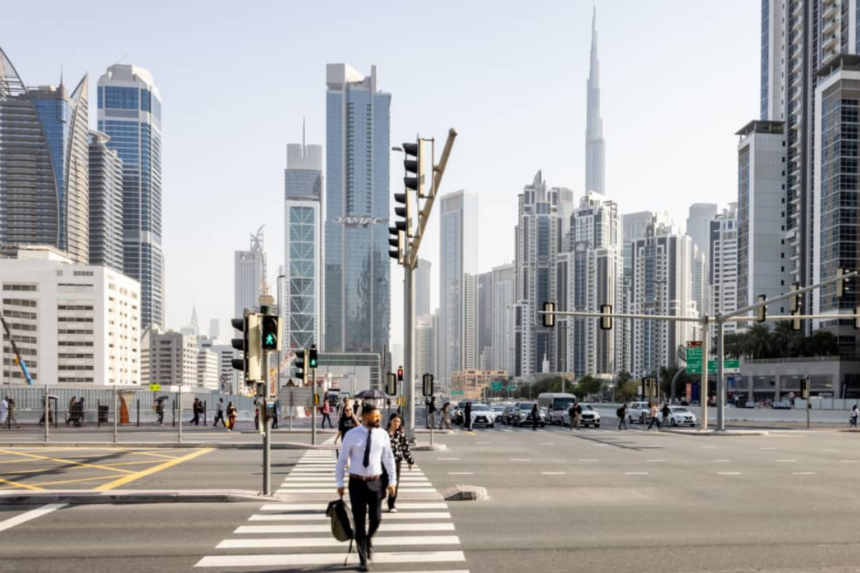
Dubai has played a central role in this expansion, driving a significant portion of regional demand through both residents and international visitors.
Sales and Demand Face Immediate Pressure
Analysts warn that sales in the Middle East could decline sharply in the short term, with worst-case estimates suggesting a potential 50 percent drop during peak disruption periods.
Luxury carmakers, including Bentley and Maserati, have already paused deliveries to the region due to security and logistical concerns.
Consumer behavior is also shifting, with high-net-worth individuals delaying discretionary purchases amid uncertainty.
Tourism Dependency Adds to Vulnerability
A large share of luxury spending in the UAE is driven by international tourists.
Approximately 60 percent of luxury purchases in the region come from visitors, many of whom originate from Russia, Saudi Arabia, China, and India.
Any sustained disruption to travel or regional stability directly impacts this demand base.
Wealth Effect and Market Volatility
Luxury consumption is closely tied to financial markets and the so-called wealth effect.
As stock markets become volatile, high-net-worth individuals tend to reduce discretionary spending.
At the same time, rising oil prices contribute to inflation, affecting aspirational consumers who are more sensitive to economic pressure.
Industry Recovery Faces Delays
The timing of the disruption is critical.
The luxury sector had been positioning for a rebound in 2026, supported by improving demand in China, steady performance in Europe, and continued strength in the United States.
Geopolitical uncertainty now threatens to delay that recovery by weakening both consumer confidence and investor expectations.
Not a Structural Collapse, but a Strategic Shock
Despite the sharp market reaction, analysts suggest the long-term impact may depend on the duration of the conflict.
If disruptions remain short-lived, the effect on annual performance could be limited.
Luxury brands are already adapting by maintaining direct relationships with high-value clients and continuing sales through private channels.
A Sector Increasingly Tied to Global Stability
The broader takeaway is structural.
Luxury demand is no longer driven solely by traditional markets. It is increasingly linked to global mobility, financial markets, and geopolitical stability.
The Middle East, once a peripheral contributor, has become a critical growth engine.
Any disruption in the region now carries disproportionate influence over the industry’s trajectory.
Source: CNBC